WORK

WORK. It's what we do, what we obsess over, celebrate, complain about, get paid for. We may call it Art, but it's still work. Particularly for creative types, where we do our work must have something to do with how it turns out, for better or worse - yet we rarely get to see behind the curtain.

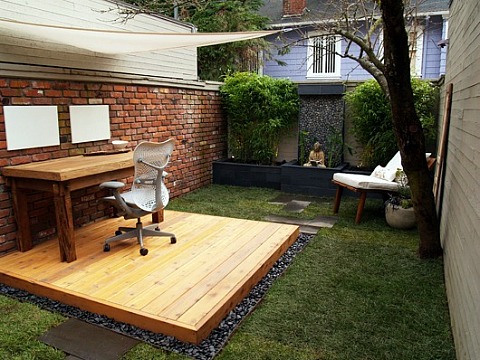
We would like you to share something about your special place where creativity blooms. So where do you work?
Showing posts with label workplace. Show all posts

Monday, February 27, 2017

Not Afraid to Use It

When we started WuW a few years back, we envisioned an interactive conversation. Creative folks would expound on how their work spaces came to be, what they liked best or least, and why it works well for them. While we had some initial success with this format, it gradually morphed into something else, a collection of unusual jobs and work spaces.

Leave it to the New York Times to deliver a short, neat feature that does exactly what we longed for way back when. A profile of Paola Antonelli, Senior Curator  of architecture and design for  MOMA, expounds upon the features of her workspace (and her working style) in a way that reaffirms what we love about this format. Here are a few gems from from Ms. Antonelli:

"It is better to have privacy, but if I were to chose between a cubicle and completely open space, I would choose the open space. The illusion of privacy is worse than no privacy."

"Design is to be used. I would never have it just to contemplate it. That would be an aberration."

"What is important is that whatever kind of office people work in, they have the chance to customize their space. People must make their nest."

To copy much more might be plagiarism. You should go HERE to see the original story. We'd like to think we had an original idea, though.

Wednesday, August 21, 2013

WORK - LIVE - GO!

A study in restraint
Architectural student Hank Butitta was tired of designing buildings that weren't real for clients that didn't exist. He wanted to do something real, to work with his hands and put his ideas into practice, so he bought a used school bus and converted it into a clean, modular live/work environment. He presented his bus for critique - complete with a kitchen, bathroom, beds, storage, and even a floor made from recycled gymnasium maple. Imagine his fellow students, with cardboard models, digital fly-throughs and paper renderings - I'll bet Hank's crit put some of them to shame.
 After his final presentation,  Hank and his co-conspirators left  for a 5,000 mile tour heading West. Summer's winding down, but they have just about reached the halfway point. 
On the Road Again
We applaud the practical ingenuity of a student stretching the conventional boundaries of study. His modular work/live space is well thought out and neatly executed - bravo to Hank.
 
You can see more photos, video, and follow their travels over at Hank Bought a Bus. (via Home Designing, Gizmodo, Le Monde Tue Nini)

Wednesday, August 14, 2013

Deep under cover in the Jungle


We've always taken a light-hearted view at Whereuwork. An inch deep, a mile wide, simple profiles of "creative caves, by and for creative folks." Now and then, something comes along that catches us by surprise, like the home and workplace of Glenn Greenwald.


 Mr. Greenwald is a journalist of deep passion and conviction working in the arena of civil rights. He is a man in the thick of it, jousting with world leaders, shining a light in the darkest recesses of the CIA, NSA, MI6, Interpol and God knows which other secret spy agencies.We would have assumed, if we gave it any thought, that Mr. Greenwald of course lived in New York or London, close to his adversaries and publishers. Not so - this from a report in the New York Times on Tuesday:

"..Greenwald lives and works in a house surrounded by tropical foliage in a remote area of Rio de Janeiro. He shares the home with his Brazilian partner and their 10 dogs and one cat, and the place has the feel of a low-key fraternity that has been dropped down in the jungle. The kitchen clock is off by hours, but no one notices; dishes tend to pile up in the sink; the living room contains a table and a couch and a large TV, an Xbox console and a box of poker chips and not much else. The refrigerator is not always filled with fresh vegetables. A family of monkeys occasionally raids the banana trees in the backyard and engages in shrieking battles with the dogs.
Mauricio Lima for The New York Times
Greenwald does most of his work on a shaded porch, usually dressed in a T-shirt, surfer shorts and flip-flops. Over the four days I spent there, he was in perpetual motion, speaking on the phone in Portuguese and English, rushing out the door to be interviewed in the city below, answering calls and e-mails from people seeking information about Snowden, tweeting to his 225,000 followers (and conducting intense arguments with a number of them), then sitting down to write more N.S.A. articles for The Guardian, all while pleading with his dogs to stay quiet. During one especially fever-pitched moment, he hollered, “Shut up, everyone,” but they didn’t seem to care..."

We are astonished that a man so active on a worldwide basis, so engaged in civil rights battles, can do serious work from a jungle retreat - complete with screaming monkeys.  Our (tin foil) hat is off to you, sir.
If you haven't heard of Glenn Greenwald, well then, you are simply not paying attention. You can find more (much more) HERE.

Wednesday, August 7, 2013

Esprit de Cream

Edward, dishing the scoop.
I recently had the pleasure of wandering in downtown LA on a balmy summer's night. Once you leave the shiny business and museum district and head South and East, the streets start to feel softer, freer, like old familiar shoes (well worn, a bit scuffed, perhaps a bit pungent, too). People were hanging out on corners, browsing at the Last Bookstore, waiting for the bus - it's a real live gritty city, alright.

So imagine my surprise when I saw a brand new housing complex and what I took to be a hipster bike store near Fifth and Main. A cacphony of spinning gears and bobbing wheels in a tall picture window, a queue of people staring into their phones.
Peddler's also does house calls - with a portable churn.

Once inside, it became clear that something else was going on. A dapper fellow on a roller-racer was peddling away, cranking the whole moving window art piece with every stroke - but also churning ice cream! A long chain through the wall was turning an iced tub in the back room, churning out oodles of delicious ice cream and sorbet.


"Peddler's Creamery" is the brainchild of Edward Belden and a dedicated crew of idealists who are determined to think different. PC is a Benefit Corporation, a new class of business that considers social and environmental costs, as well as profit, in their business planning.
Hey, maybe corporations can be people after all...


Edward says the hardest part was the initial funding. Once he got a few committed partners, the momentum took off. Now, there is a 'Peddler's Club' - a de facto waiting list for the honor of spinning the ice cream churn.
Sophie churns, the kinetic window art turns like a clockwork.
Their excellent ice cream and sorbet features local, organic, dairy, non-dairy and vegan ingredients. They are committed to their local neighborhood; 5% of profits are donated to social and environmental causes.
Nouveau Cyclistes are alive and well in South LA, and the food scene is all the better for it.

Hungry for more info? Check out www.peddlerscreamery.com for the, ah, scoop.

Saturday, March 23, 2013

A River Runs Through It: Bridge-tending in the Delta

Paintersville Bridge, Sacramento Delta
 Rashid will tell you he has the easiest job in the world. He is a shy man, quiet, not prone to look you in the eye, and he likes his solitude. Rashid is a drawbridge operator in the Sacramento Delta. His job is to sit in the small, tidy shack hanging off the side of the bridge and wait for tall boats that may come up or downriver.

A boat captain will signal - either by phone or radio - and Rashid starts raising the bridge. It's a by-the-book process, starting with an alarm bell to stop auto traffic. Step by step, barricades are lowered, clearances confirmed, bolts unlocked, motors engaged and in a couple of minutes the bridge is raised to allow the yacht, high-masted schooner, barge or river boat to pass under.

 But most of the day is spent sitting and watching the river roll by. There's time for reading, writing or studying. There's also plenty of time for loafing, watching television and eating. It takes some discipline to avoid these temptations.The office is surprisingly pleasant, with clear view of the river and of the bridge roadway.

 Approaching the Paintersville bridge, I had romantic visions of writers like Jack Kerouac, Gary Snyder or Jim Dodge sitting in lookout stations on Desolation Peak, in splendid isolation, creating their American classic novels and poetry. The difference with a bridge is that you are not exactly isolated. Every car or truck that crosses announces itself loudly and with plenty of vibration.

 The Cal Trans District 4 operates six bridges in the Sacramento/San Joaquin delta. Paintersville, Steamboat, Isleton, Mokoloumne, Rio Vista and the big gold beast in downtown Sacramento. Counties operate few more.Most of the delta bridges are the Bascule type. They pivot upwards, thanks to immense concrete counterbalances. A few are lift bridges or turn bridges - which operate exactly as they sound.
There is an undeniable appeal in the solitary profession of bridge-tender. Our world is overrun with data and congestion, over-saturated with complexity and multi-tasking. imagine the simplicity of walking down that narrow plank path to your little shack hanging off the side of a bridge, knowing you only have one direct, simple responsibility. That's something to day dream about while stuck in traffic, eh?

Tuesday, October 16, 2012

Free Mending Library

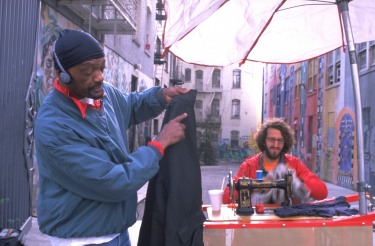
 Michael Swaine mends clothes for people for free. Let me repeat that. Michael Swaine - an artist and ceramics instructor at CCA - takes a day each month  for mending, sewing and repairing clothes for people in the Tenderloin neighborhood in San Francisco. He calls this the Free Mending Library and he's been at it for more than a decade.

 What first caught our eye is the simple economy of his operation. His rolling cart with a foot-treadle sewing machine, mending storage and built-in umbrella is spare and to the point. Michael started this - project? endeavor? -  as "Reap What You Sew" pushing his cart around town, basically looking for people who might want his services. Before long he figured out two things: 1) the Tenderloin was the most interesting neighborhood for human interaction, and 2) it's easier for people to find you if they know where you will be.
Michael eventually settled in outside the Luggage Store, an art collective at 509 Ellis Street, where he mends for free on the 15th of each month. He has hope that the Free Mending Library will expand naturally, as others with talent or time show up to simply help fix things - be that clothing, appliances, resumes or whatever. All are welcome - to give help, accept it, chat, debate or just share some time.

This may be a trend - the Amsterdam the Repair Cafe was founded 3 years ago, with all the community and government support one might expect from the Dutch.

In San Francisco, Michael Swaine remains a solo act, but there is real work happening here. Not commerce, not emerging technologies, not automation. For Michael the reward is that human interaction.


You can read more about the Free Mending Library HERE.  thanks to Darby Minnow Smith and GRIST.
You can see a short feature HERE

Friday, October 5, 2012

Portable Power

 As we head into the winter season, the longer, darker days seem to set creative minds to thinking about alternatives to alternative (solar) power.
 The folks at frog design created a prototype personal wind turbine that earned them a Braun Prize for sustainability in 2012. This elegant device is light, portable and will allow you to power your workstation at any windy locale, no sunlight required.
Computer power, no sunlight required
Easy as 1, 2, 3.
While we're not sure that blogging from a blustery bench would be beneficial to our output, we are fascinated by the liberating possibilities of portable, personal wind power and we applaud this truly elegant and sensuous design.It beats the hell out of a Honda gas generator.

You can read all about it HERE

Tuesday, September 25, 2012

Facebook: Faceless workplace?

The wiley Mark Zuckerberg has hired the wry Frank Gehry to design a new, massive workplace for Facebook employees, and some folks think this is just playing it safe. It is true that Mr. Gehry is several decades past being l'enfant terrible, but all that experience may well be a good balance for the impulsive tendencies of newly-minted silicon valley billionaires. Allison Arieff is doubtful that Gehry can deliver something meaningful for Facebook - but I am more hopeful.
Frank O and Mark Z play with blocks
 Gehry has a public reputation for remarkable but expensive buildings that leak. That opinion is not well supported by fact, however. Among clients, he has a reputation for developing great building programs - the functional space layouts that make his buildings pleasant and efficient places to work. Developing a single, cohesive workplace for 2800 employees will not be easy. The idea of 2800 people of any profession all under the same roof is frightening; the more so when they are all young, flailing engineers trying to figure out what in the Hell they are producing . But if anyone is up to the task, it's Frank O. Gehry Partners.
The Architecture that architects love to hate.
You can read more about this - including an unsubstantiated jab at open offices  - at Allison Arieff's design blog.

Thursday, May 31, 2012

They say there's always magic in the air...

New York is expensive - one thin dime won't even shine your shoes. Poor creative types are always striving to live there - if you can make it there, you'll make it anywhere. Here's just such an architect, managing nicely in less space than it takes to park a Mini Cooper.
Admittedly, we'd rather have a bit more room than this, but applaud Luke for making it so.


Architects used to require layout space for plans that would eclipse this apartment size. The advance of laptop computers allows Luke to work where he lives, on the smallest of table tops.


You can see more (though there's not much more to see) by going here-
Luke Tyler's 78 Square Foot NYC Apartment

Wednesday, November 30, 2011

Wherever you go, there you are.

Looking at the Creative Caves where people do their work, we are drawn to those who buck convention and do it wherever they happen to land. No ergonomic studies, market research, triple-net leases, office furniture, telephone systems, alarms, professional liability insurance, ad nauseum. Some people simply leap into the void and find their calling. And it's thrilling when it works, as in the case of Alison Turner.

It seems Alison was a slave to her Blackberry and the treadmill of unseemly corporate life. In spite of the great pay, she threw off the yoke and hit the road, stumbled alone in the wilderness for a time, then found herself a new life's purpose. It's a beautiful story - maybe a fantasy for most - but there is wisdom in striving to live up to this simple axiom:

"Every day, try to do something that you love."


You can read all bout Alison and see her great photos here:  http://www.alisonslife.com/

Thursday, November 10, 2011

The Italian Job


Bicycle component maker Campagnolo has manged to avoid the exodus to China that seems to drive all business, like lemmings, to seek the cheapest possible labor. Italian craftsmen, each at their own stations, continue to craft the finest racing components in the world from their bright and airy plant in Vicenza.
Campy has a very loyal following, largely due to the gorgeous, sexy and sensuous quality of their racing products. We like their adherence to old-world standards, and not just from a nostalgic viewpoint Campy, like Ferarri or Rolex, remains THE world standard for quality and innovation in the cycling world.


Get the full story here - BICYCLING

Wednesday, September 7, 2011

Staffs & Chaffs

Doug & his Tres
Doug Pauly draws creative inspiration from many sources. A working musician for three decades, he is a gifted jazz guitarist, a skilled transcriber and a great teacher. We asked about his work space and got a very complex response that raised more questions than it answered - so we decided to investigate further.
Doug & his grass weaving
 For decades the New Yorker magazine's weekly night-life calendar has famously cautioned, "Musicians live complicated lives..." This is true in Sacramento as well as in the Big Apple. Just try pinning Doug down on his favorite workplace. That might be on a bandstand with a dozen musicians working behind a noted singer; it might be a solo stool in a cool night club; it might be his compact lesson room at the Guitar Workshop; or it might be his cozy little home studio. Then again, it might be the cemetery where he walks the dog and hums little ditties that eventually turn into jazz tunes. OK, too complicated for a simple little blog - let's look at the home studio.

The Home Studio
Doug's studio is comfortable, compact and ergonomically suited to his needs. A Mac computer is front & center, the heart of his transcription operation. He has written charts for hundreds of jazz standards and pop tunes and is sought out by many professional musicians for this specialty.
Custom-built book cases hold decades of accumulated music. There's room for one guitar stand (currently occupied by his "Tres" a guitar-like instrument of Cuban origin), as well as one visitor seat and a bit of recording equipment. And there is his all-important "window on the world" opening to the verdant garden yard. 
The phantom Grass Studio
We took a stroll in the garden where Doug showed me his weaving studio in a converted garage. The guitarist is also a grass weaver! He harvests California native grasses, weeds and grains and transforms them into complex and elegant wall hangings.

Staffs & Measures

Shafts & Grains
It turns out that scoring music and weaving grasses are not so very far apart, artistically speaking. There's a steady measure, rhythm and texture to each kind of art - from a visual viewpoint. And aurally speaking, clear and complex guitar fingerwork blends nicely with the soft rustling of wild grasses.

Doug Pauly is an accomplished musician and weaver residing in Curtis Park, Sacramento. His music can be heard at DOUG PAULY

Wednesday, August 24, 2011

Working Outdoors

As summer winds down, Herman Miller Lifework posts a question and a roundup of  outdoor work spaces. An Aeron Chair in a zen garden looks pretty sexy in a photo; but could you actually do computer work there? Let's hope the sprinkler timer is off!

Get the full story HERE
 Here at Whereuwork we remain uneasy about knitting widely different work and leisure activities together. Is anything gained by 'working' on an ipad in a park? We suspect that both realms are diminished - one's appreciation of nature as well as one's ability to do meaningful work. Multitasking can be overrated.

Wednesday, August 17, 2011

Letterpress Fetish

Letterpress printing has a cult status among graphic artists. It is mythical, reaching back in time to when printing was a very physical act - before the clicking & dragging disconnect of digital art and web pages.

Paul Shaw from Print magazine recently spent a weekend near Milan with Lucio Passerini, an Italian typographer of some reknown, and he wrote up a nice non-print profile of their visit. What Whereuwork likes so much about this report is the focus on Lucio's workshop - Il Buon Tempo - the physical space where he creates.

Type Banks
My childhood Saturdays were often spent playing in the pressroom of a weekly newspaper. My father was editor, reporter and chief bottle-washer in a pre-offset world. The smells of molten lead, ink-soaked wood and crisp newsprint come rushing back to me, looking at this photo.I long for the physical constructs of the printed word.

Get the full story here - IMPRINT


Thursday, August 11, 2011

How Skinny can you go?

Keret House, Warsaw
 With much of this country reeling from McMansion overload, designers have focused on going small for home and office. But Jakub Szczesny takes it to a new level with his Keret House in Warsaw, Poland. It is so small, so narrow that it defies description. We like that he called it an art project and thereby avoided building codes - Art Power! The question remains - how much is too little? Could you really live or work here without flipping out?

Get the full story HERE

Monday, August 1, 2011

Is there Creative Life Beyond the Cubicle?

Does anyone actually work here?
 Allison Arieff, former editor of Dwell magazine, design maven and NY Times blogger, examines the stark differences between  the image of the office cubicle, as promoted by high-design modular furniture companies, and the down to earth, ad-hoc places where many creatives actually do their work. She asked the provocative question, is there a better big-new-idea than the cubicle - and boy did she get responses. Most people railed against the cube, a few suggested only a private closed office will do; but no-one really described anything remotely new or different.

Making it real: a creative comfort zone
Ideas about work spaces range from interesting to absurd, but we are always curious to see the actual places where creative people work. Most telling was Andrew Berardini's musing on his own, very real desk.The differences between the real and the ideal seem to be vast.
Get the full story here: Beyond the Cubicle

Tuesday, July 19, 2011

Izzy's Funhouse

When the Circus came to Town.
We have heard stories about the wild and playful places where some people work - the Google and Pixar palaces with loads of kids toys for grownups. They sport foosball tables and basketball hoops to fool with while they wax creative. Forced fun for a captive audience, these corporate idea mills cannot hold a candle to Izzy's Funhouse.
He's a pinball wizard, that has to be a twist...
 Izzy is an artist and commercial photographer who collects iconic trappings of 20th century American life - such as Halloween masks, paint-by-number kits and pinball machines. It turns out that a photo studio and amusement arcade can coexist quite nicely. Mechanical Pinball and arcade machines reached a zenith of popularity in the 1960's, sucking kid's quarters like slot machines. These were sturdy workhorses, designed for punishing use. Many machines are still in existence, though they now could use some TLC, if not outright rebuilding. Izzy is a handy guy, and so a corner of the photo studio has become a dedicated renovation shop for vintage arcade games.

Pre-circuit board technology
The inside of a vintage pinball machine is a collection of coils, switches, solenoids, lights and levers. This is old-school analog technology at its best. Needlenose pliers, dust brush, tweezers and a soldering iron are the preferred tools here.


The studio is in a nondescript one-story business park, about as anonymous as can be. Izzy says he misses his old Midtown Sacramento studio with its friendly neighbors, restaurants and services in easy walking distance. But more space, better layout and lower rent just make good business sense. Between photo assignments he tinkers with an old wood-rail machine, preparing for the Pacific Pinball Expo in September. It is an enviable creative environment in which to work, with stress relief always right at hand. Eat your heart out, Pixar.
Izzy Schwartz is an artist, commercial photographer and arcade aficionado residing in Sacramento. His work can be found HERE 

Wednesday, July 13, 2011

Ghost Lab Design Conference 2011

Nova Scotia site of the Ghostlab
Architect Bryan McKay-Lyons has run a summer design/build camp for creative architectural students for the past dozen years. This year, he decided a conference would be a nice change. Esteemed luminaries such as Rick Joy, Glenn Murcutt, Kenneth Frampton and Ted Flato joined nearly 200 others for this June gathering to talk about architecture, sustainability and place. Wouldn't it be something to get an invite to the Ghostlab 2012 conference!

Full story here -
Ghost Lab 2011 | Editorial | Architectural Record

Saturday, June 4, 2011

The moveable feast, or nomadic workplace

 
raison d'etre
Russ & Laura are a hard-working couple. They run a cottage industry around bicycle travel and touring, conducting interviews, testing and reviewing bicycle products, creating art and books, making presentations and leading bike tours. Now they are entering the world of video production. And they do all this without an office or a home.

Amtrak as office
In January of 2009 they  " turned in their housekeys "  and hit the road on bicycles, carrying everything they need for living. They make frequent stops along their travels, for impromptu presentations in bike shops, hosting S24O campouts and generally promoting the adventure of bicycle living.

People love to hear their stories

Here's Russ describing their first season on the road:
  "After rambling across the country for 15 months, we feel like we’ve become hardened travelers. The idea of heading back out into nothingness isn’t something we need to steel ourselves against, and the details of life on the road aren’t overwhelming like they were two years ago. Instead of figuring out health insurance or a home for our couch, we can focus on how to structure our work flow on the road so that we can actually accomplish everything we want to do. We feel like we’re able to be much more pro-active in our plans for this next trip, and think about the bigger picture."


In the Spring of 2011, they are hitting the long road once again.  You can follow their progress at Path Less Pedaled. It makes for very interesting reading.